Embracing the Future: Highlights from this Year's Global HR Tech Expo in Las Vegas

Melissa Martin • November 14, 2023

As a results-driven human resources leader energised to help organisations realise the true value of what a strategic people-strategy can bring to the organisation, it is critical to keep abreast of how the future of HR is evolving, especially from a HR Tech perspective. I was delighted to foster quality time to view the vibrant display of HR Technology and hear how key elements are set to revolutionize the HR landscape at this year's HR Tech Conference. Allow me to share my top 5 takeaways -

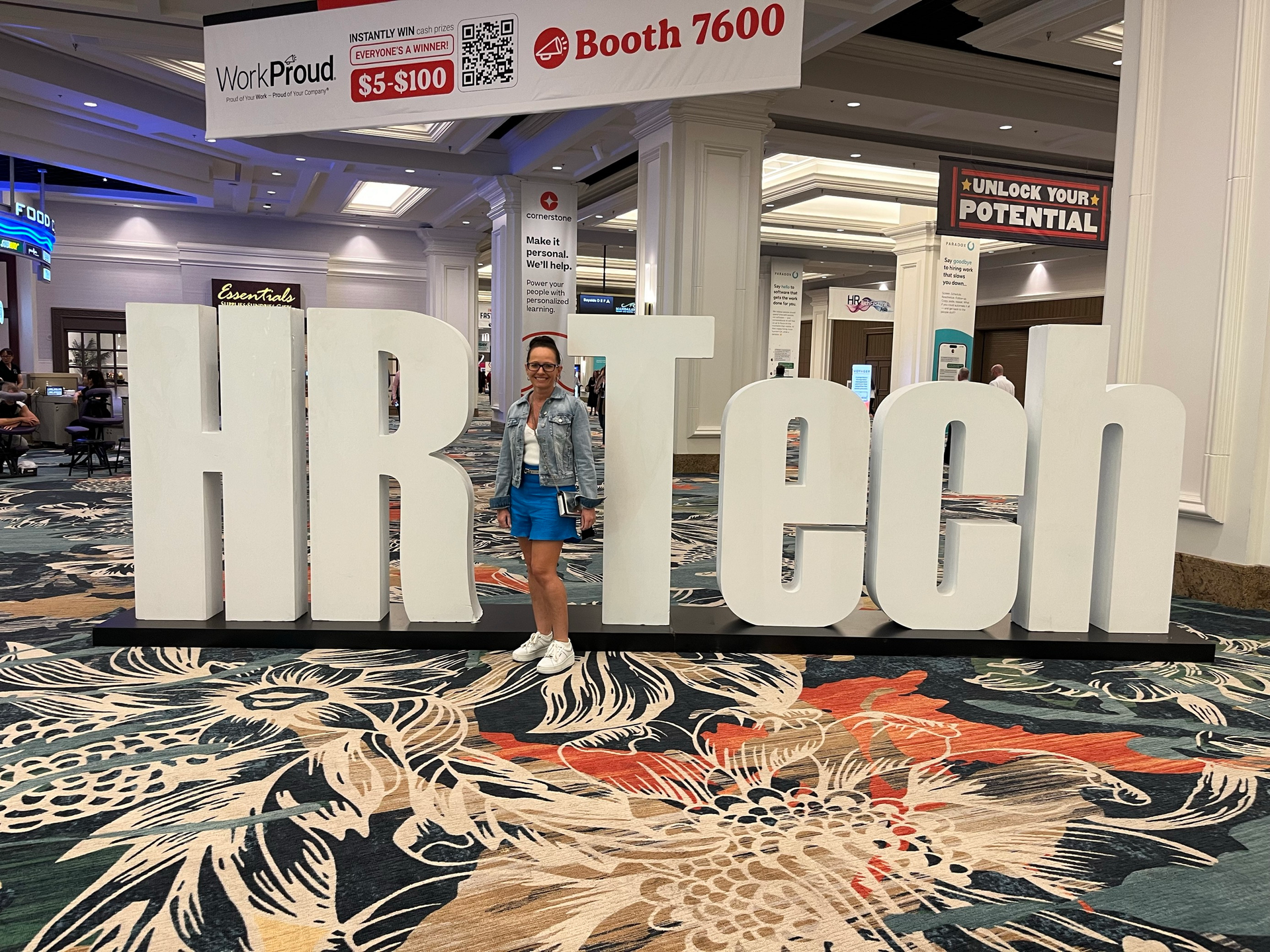
A woman is standing in front of a large sign that says hr tech.

1. Artificial Intelligence and Machine Learning:

The integration of Artificial Intelligence (AI) and Machine Learning (ML) in HR technology was a prominent theme that gained significant attention at this year’s expo. AI-driven tools are empowering HR professionals to make data-driven decisions, predict employee needs, and enhance the overall employee experience. From intelligent recruitment platforms that analyse resumes and predict candidate success to chatbots that provide instant HR support, the marriage of AI and HR is ushering in a new era of efficiency and productivity. It is critical for HR to embrace this revolution and identify your company strategy that balances AI and the HR human touch.


2. Employee Well-being and Mental Health Support:

In the wake of the ongoing global challenges, employee well-being and mental health support took centre stage. With the psychosocial law incorporated this year to the WHS Act, I was interested to see how tech was designed to monitor and support employee well-being, ranging from stress management apps to virtual therapy platforms. These tools not only help employees navigate personal challenges but also enable organisations to create a supportive and empathetic workplace environment to show they are managing the risk of psychosocial hazards in the workplace.


3. Diversity, Equity, and Inclusion (DEI) Solutions:

Promoting diversity, equity, and inclusion in the workplace has become a top priority for businesses worldwide. The expo featured innovative technologies aimed at fostering diversity and inclusion, including bias detection tools, diversity recruitment platforms, and inclusive communication software. These tools are helping organizations create diverse and equitable workforces, fostering creativity and innovation.


4. Love + Work – Designing work that People Love:

Drawing on what is deeply important for an employee’s relationship to their work and unlocking their strengths will increase performance beyond your expectations. Marcus Buckingham is a Best-Selling Author and the World’s Most Prominent Researcher on Strengths, Leadership and High-Performance at Work. Buckingham focuses on unlocking strengths, increasing performance, and is pioneering the future of how people work. Buckingham’s most recent book, Love + Work (Harvard Business Review Press) is a WSJ bestseller and has been heralded by Forbes as one of the ten must-reads for career and leadership.


At the HR Tech Conference, Buckingham presented at the HR Tech Conference in Vegas on "The Most Human Human at Work". I genuinely resonated with the key takeaways that we need to draw on how we can engage employees into a deeply human relationship with their work. At WorkTrybe, we inspire and nurture human connection and believe in living better. To hear Buckingham say, “Love is the most powerful force in business by far”, certainly made me want to further embrace and lead our WorkTrybe culture, so I can enjoy hearing the team say how much they articulate their “LOVE” for our Trybe (at WorkTrybe our team is fondly our “Trybe”), our clients, our candidates, our and leaders. I highly recommend investing time to read Love + Work.


5. Remote Work Solutions:

The widespread adoption of remote work has led to a surge in demand for technologies that facilitate seamless collaboration and communication among remote teams. HR Tech Expo showcased virtual reality meeting platforms, AI-driven project management tools, and employee engagement apps tailored for remote work environments. These solutions are instrumental in bridging the gap between remote employees, enhancing team collaboration, and ensuring a cohesive company culture.


In conclusion, the HR Tech Expo in Las Vegas this year showcased a plethora of innovative solutions that are reshaping the HR landscape. As technology continues to evolve, these advancements are not only enhancing operational efficiency but also transforming the way organisation's approach employee well-being, diversity, remote work and learning.


Embracing these key elements is vital for HR Leaders to ensure they stay ahead of the curve and balance HR Strategy with the ever-changing world of work. I’d love to share further insights with you.


Reach out any time and LET’S TALK!


A woman wearing glasses and a white shirt is smiling with her arms crossed.

MELISSA MARTIN, WORKTRYBE DIRECTOR


Melissa is a results driven human resources leader energised to help organisations realise the true value of what a strategic people strategy can bring to the organisation. She is courageous and inspires teams, for the design and delivery of HR programs that deliver first class results. She is commercially astute and capable of balancing between what is right for the people and what is needed for the organisation to succeed.  


Speak to Mel at melissa.martin@worktrybe.com to discuss all things HR, and discover how she can take your organisation to the next level!


By Kylie Saunders June 6, 2026
From 1 July, Payday Super becomes an operational stress test for growing SMEs For many growing businesses, Payday Super looks like a payroll compliance change. In reality, it’s much bigger than that. From 1 July, superannuation will need to be paid at the same time as wages rather than quarterly - and while the legislative change itself is straightforward, the operational impact for growing SMEs is likely to be far more significant. Because Payday Super doesn’t just change when super is paid. It increases the pressure on: Payroll accuracy Workforce data Onboarding processes System integration Cashflow timing Operational accountability And for businesses scaling beyond 30 employees, it will quickly expose whether current people systems are genuinely built to scale - or whether they’ve simply evolved over time. What actually changes - and why it matters Historically, many businesses have managed superannuation quarterly. That gap created breathing room. From 1 July, that buffer disappears. Super will need to move in line with payroll cycles, meaning errors, delays, or inconsistencies become visible much faster. On its own, that’s manageable. But where payroll, HR, onboarding, recruitment, and workforce data are operating separately - or relying on manual processes - even small inefficiencies can quickly create operational friction. And importantly, there’s also a cashflow shift. While Payday Super doesn’t increase the overall cost of superannuation, it changes the timing of how cash moves through the business. For growing SMEs already balancing recruitment, wage pressure, and operational growth, that adjustment may feel significant initially. This is why Payday Super is becoming less of a compliance conversation and more of an operational readiness conversation. Why growing businesses are particularly vulnerable In early-stage growth, most businesses build people processes organically. Spreadsheets fill gaps. Systems are added as needed. Payroll “works.” Recruitment happens reactively. Different functions operate independently. And for a while, that’s completely normal. But as headcount grows, complexity compounds. We often see businesses reach the 30-80 employee mark with: Payroll systems that aren’t connected to onboarding or HR workflows Multiple platforms with overlapping responsibilities Inconsistent employee data Underutilised or no “source of truth” for employee data or HR system Recruitment decisions increasing payroll complexity without supporting structure Unclear ownership across payroll, HR, finance, and hiring None of these issues are unusual. But Payday Super increases the cost of operational friction. What used to be manageable in quarterly cycles can become far more visible - and far more disruptive - when payroll and super obligations tighten into the same operating rhythm. The better question for growing businesses Rather than asking: “Are we compliant for Payday Super?” the more useful question is: “Are our workforce systems actually built to scale?” For most growing businesses, that comes down to a few fundamentals: Do we trust the accuracy of our workforce and payroll data? Do our systems communicate properly with one another? Is onboarding connected to payroll and HR workflows? Is there clear accountability across payroll, HR, hiring, and people operations? Can our current setup support another 20, 50, or 100 employees without increasing operational strain? These are often the questions already sitting beneath the surface and Payday Super simply brings them into focus much faster. What scalable businesses tend to do differently The businesses navigating this transition best are typically operating with a more connected workforce model. That doesn’t necessarily mean introducing more software. It usually means creating stronger alignment between: Payroll HR Recruitment Onboarding Workforce processes Leadership accountability At a practical level, scalable businesses tend to have: Connected workforce systems Embedded payroll and HR processes Clearer operational ownership Better visibility across workforce data Onboarding workflows that reduce downstream payroll risk Systems that are properly adopted, not just implemented Because when workforce operations scale well, compliance becomes significantly easier to manage. Where businesses often get stuck For many teams, the challenge isn’t recognising the issue. It’s knowing how to move forward while still running the business day-to-day. We commonly see businesses struggling with: Multiple vendors and no single point of accountability Systems implemented once but never fully embedded Reactive operational fixes instead of scalable processes Payroll, recruitment, and HR functions operating independently Growing workforce complexity without operational visibility Over time, this creates friction that becomes increasingly difficult to unwind. A more connected approach to workforce operations At WorkTrybe, we believe growing businesses need more than isolated HR support or standalone system implementations. They need workforce systems, operational support, and people processes that grow with the business. That’s why we work as a human-first workforce partner for growing SMEs - bringing together Employment Hero implementation, HR advisory, recruitment, payroll support, and workforce capability into one connected model. The goal isn’t simply to implement software or solve one-off problems. It’s to help businesses create workforce operations that feel scalable, practical, and sustainable as they grow. Parting thoughts Payday Super may appear to be an administrative change. But for growing SMEs, it’s likely to become a very real operational stress test. A moment that reveals whether current systems, processes, and workforce operations are built for the next stage of growth - or still operating the way they did when the business was smaller. The good news is that businesses still have time to prepare. Over the coming weeks, we’re helping growing businesses review whether their payroll, onboarding, HR, and workforce systems are genuinely ready for Payday Super and the operational pressure that comes with it. If you’d like a practical workforce readiness review before 1 July, feel free to reach out .

By Michael Guazzarotto April 22, 2025
Australia’s employment landscape is undergoing a major transformation. A growing number of professionals are stepping away from the traditional 9-to-5 model in favour of short-term, project-based roles . These contingent workers - whether contractors, freelancers, consultants, or temporary staff - now represent over 35% of the national workforce. That figure continues to rise as flexibility and autonomy become top priorities for both individuals and employers.  For medium-sized enterprises, leveraging contingent talent can offer the agility to fill skills gaps, respond to shifting demands, and better manage costs. But it takes more than just hiring a contractor - you need a structured approach and the right tech infrastructure to do it effectively. In this guide, we’ll explore how to integrate contingent workers into your broader workforce strategy. We’ll look at why this shift is accelerating, and how our partnership with Rippling is helping organisations adapt to this modern employment model.
By Michael Guazzarotto April 1, 2025
Recruiting and retaining skilled employees, particularly in lower-wage roles, is becoming an increasingly difficult challenge for many businesses across Australia. As industries face declining productivity, disengaged teams, and high turnover rates, the pressure is mounting for leaders to rethink their strategies. According to a recent report from The CEO Institute (Feb 2025), these issues are not just impacting day-to-day operations — they’re shaping the very future of organisations. In an era where the war for talent is fiercer than ever, businesses must shift from reactive hiring practices to proactive, strategic workforce planning. The need for skilled candidates is critical, but it’s equally important to create a work environment that encourages retention and productivity. This is where WorkTrybe steps in.
More Posts